Why Finding Focus Exist
My head is usually like a TikTok stream of thoughts and noise.
But every now and then, I find silence.
That is probably the simplest way I can explain why Finding Focus exists.
Finding Focus isn’t just about photography. The mental-health side came first. Photography became part of the story much later.
And I suppose the story starts long before I ever picked up a camera.
Feeling Different
If you'd asked me years ago when my depression started, I'd probably have said my mid-teens. That's when I became aware of going into what I called dark places. Looking back now, after years of working with my therapist, Chris, I can see things were happening earlier than that. I just didn't understand them at the time.
As a kid I often felt like I didn't quite fit in. I didn't seem to approach things in the same way as everybody else and confidence was always an issue.
There's one memory from primary school that has stayed with me.
I'd done a test with Mensa and scored very highly. They wanted me to do further tests, although at that age I wasn't particularly bothered about it. Yet I also remember a teacher taking me out of class and telling me I was stupid, that I was never going to get anywhere in life, so I shouldn't bother trying.
She was an adult. I was a kid. As far as I was concerned, she knew what she was talking about.
So I believed her.
Talking about it with Chris all these years later has given me a different way of looking at what might have been happening in that classroom. His view is that I was probably finding the work easy, getting bored because I wasn't being stimulated enough, and then acting up in class as a result.
Back in the 1980s, there wasn't anything like the understanding there is now around children whose brains work differently or who need more stimulation to stay engaged. If a kid was messing about in class, the response was often simply to punish the behaviour and bring them back into line.
Maybe that was what my teacher thought she was doing. Her way of dealing with me was to make me believe I was useless.
And it worked.
I stopped trying. I didn't bother with my exams at school because, in my head, what was the point? That one conversation planted something in me about my own ability and self-confidence that I'm still working on now.
There were other things too. I lost my nan when I was around 14 or 15, the first close family member I'd lost, and I never really processed it. There were things happening in those early teenage years that I can only really understand with hindsight.
By my mid-teens, though, I knew something wasn't right.
The Dark Spells
The strange thing was that I often couldn't tell you what was wrong.
I could wake up one morning and just feel shit. I couldn't be arsed. I didn't want to talk to anyone. I could feel down or angry, but there wasn't necessarily a reason for it.
People would ask, “What's wrong? There must be something wrong.”
And I genuinely couldn't give them an answer.
It might last a week or two and then, almost as suddenly, I'd feel okay again. I could be fine for a month, two months or sometimes longer, and then another spell would arrive.
For most people, I became very good at appearing fine. They got the happy, laughing, joking version of me. The people closest to me tended to get the grumpy, short-tempered, can't-be-bothered version.
Years later I learned about masking, and suddenly a lot of that made sense. You can put the mask on, but it takes energy to keep it there. Eventually that energy runs out.
My dad has suffered with depression for a long time, so I had some idea that depression was probably part of what was happening to me. He encouraged me to see a doctor. I tried antidepressants on two or three different occasions, but they didn't work for me and I didn't want to feel reliant on a tablet.
So I did what I knew how to do: I tried to manage it myself.
Keep busy. Keep occupied. Try to motivate myself. Wait for the bad spell to pass.
And for more than twenty years I pretty much accepted that this was just my life.
Then my mum died.
The Point Where Everything Fell Apart
My dad had undergone heart bypass surgery a couple of years earlier. My mum later needed a heart-valve replacement. The operation itself went fine.
About three months afterwards, she wasn't feeling well. We'd had an ambulance out one night and they couldn't find anything obvious, but advised her to go into hospital for tests. This was during lockdown, so access was restricted and my dad was the one who initially went with her.
The following morning I took some medication over for her. She was sitting up, chatting and seemed fine. The doctors hadn't found anything and thought there might be an infection. They were going to do more tests.
I left her mobile with her so she could contact us, and I went to work.
At about 11 o'clock she phoned me upset. She'd overheard doctors talking and had heard something about heart failure. I tried to reassure her. Based on what I'd been told that morning, there was no reason for me to believe she was about to die.
Later I noticed a couple of missed calls from her. I tried to ring back but got no answer.
Then my dad rang. The hospital had called to say they were taking her down to critical care.
A few minutes later, the hospital called me. Her heart had stopped. My dad and I needed to get there as quickly as possible.
By the time we arrived, she had gone.
In the weeks that followed, I went further and further down. I blamed myself. I should have stayed that morning. I should have gone back when she rang upset. I should have done something differently.
I could just about drag myself through the working week, then the weekend would arrive and the smallest thing could make me break down. I reached a very bad place where I didn't want to be around anymore.
That was when I got in touch with Chris.
I genuinely believe he saved my life.
One of the first things he helped me understand was also one of the simplest: I could only make decisions using the information I had at the time.
I couldn't look back knowing my mum had died and judge the version of me who had no idea that was about to happen. That morning she was sitting up and talking. The doctors were still investigating. I reassured her using the information I'd been given.
I had done everything I could with what I knew.
Slowly, Chris helped me stop blaming myself. Once the guilt wasn't swallowing everything else, he helped me start processing the grief itself.
And somewhere in the middle of all that, something else happened.
Felixstowe
My dad wanted to visit an old Army mate in Felixstowe. I agreed to take him, but decided I would stay in a hotel on my own while he spent the weekend with his friend.
I didn't really know why. I just knew I needed to get away and be by myself for a bit.
Chris told me, in effect, that if my brain was telling me it needed that, I should listen to it.
The hotel was just off the beach. On the Friday night, something in my head told me to find out what time sunrise was, set an alarm and get up for a walk.
So I did.
I walked down to the beach before everyone else was up. I watched the sun rise. I spoke to my mum. I cried.
And I took a photograph on my phone.
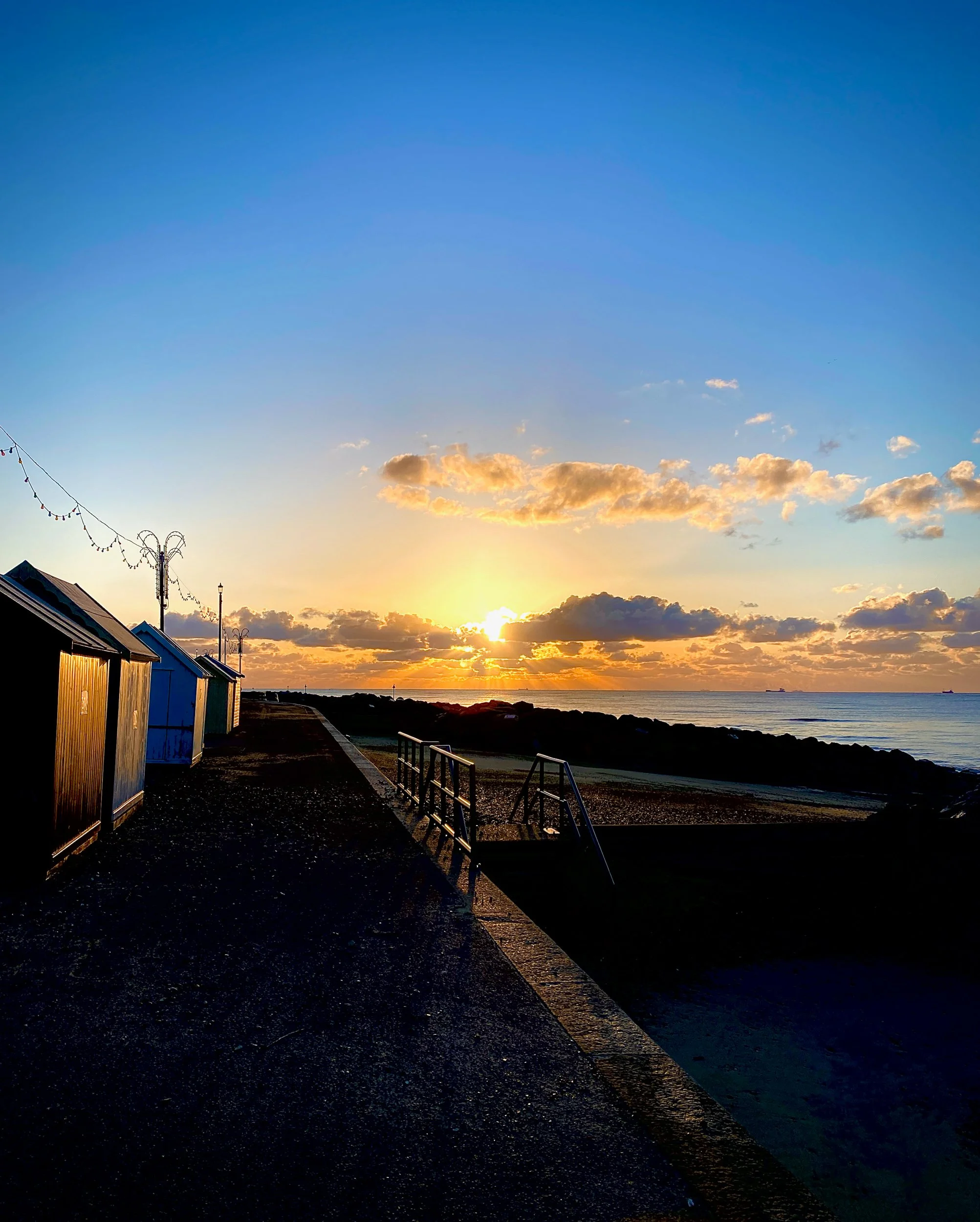
At the time, I didn't connect the photograph with anything. I think what mattered was simply being up before everybody else and having some time that belonged entirely to me.
I got up and did it again the next morning.
When I spoke to Chris about it, he told me that if it helped, I should stick with it. So for a couple of months I started getting up around six in the morning and going for a walk. That quiet time helped me get my head into a place that made the rest of the day easier.
Then life changed again. My wife, Karen, broke her ankle. Those mornings were suddenly needed to get the kids and Karen sorted before I went to work. When life eventually settled down, I couldn't quite get back into the routine. It wasn't the same.
I spent months trying different things, looking for that same sense of peace.
Nothing really clicked.
Until, by a slightly ridiculous route, photography found me again.
The Astrophotography Rabbit Hole
I'd bought a second-hand camera and lens because I'd decided I fancied trying astrophotography.
And because apparently I don't know how to casually investigate a hobby, I bought a tripod, a tracking telescope and the gear needed to attach the camera to it. Then I learned everything I could about how to do astrophotography.
I learned it.
I understood it.
And then I never actually went out and did it.
My ADHD brain had apparently decided the project was complete. The challenge had been learning how to do it. Once I'd solved that problem, the passion disappeared.
This wasn't unusual for me. I've had loads of hobbies over the years that completely took over my life for a while. I'd research everything, learn everything I could, work out exactly what equipment I needed and, usually, go out and buy it. Then something strange would happen. Once I'd understood it or got everything together, my brain seemed to decide we'd completed that one. The energy disappeared and I'd move on to something else.
So now I had a camera sitting there doing nothing.
I thought maybe I could buy a lens better suited to shooting during the day and at least get some use out of it. While researching lenses, I found a YouTube channel by a landscape photographer called Thomas Heaton.
Anyone who knows me knows what happens next when I discover a rabbit hole.
Down I went.
But something about this one was different.
Landscape photography didn't follow the usual pattern. The more I learned, the more I wanted to learn. The more I went out with the camera, the more I wanted to go out again. Instead of the energy fading once I'd figured it out, it grew.
I was looking at the landscape photographs he was producing and they were making me emotional. I wanted to be in those places. I wanted to understand how he'd made those images. I wanted to make something that made me feel the way his photographs made me feel.
So I bought a lens and a few other bits and started learning photography properly. I taught myself to shoot manually because, in my head, if I was going to do this then I was going to learn how to do it properly.
I went out. I made photographs. Most of them weren't anything special. I kept learning. I even arranged a one-to-one session with a local photographer for some pointers.
I still hadn't really noticed what photography was doing to my head.
That came later.
Rydal Water
Eventually I got to the point where I felt the old DSLR was holding me back, so I invested in a full-frame Nikon Z7II and a 24–120mm lens.
That was when I started properly going places to make photographs.
One of those trips was a planned stay near Rydal Water with Karen. There was a chance of a cloud inversion the following morning, so I decided we'd hike up Loughrigg Fell before sunrise.
We set off in the dark.
About halfway up, my Apple Watch was showing a heart rate of around 170 bpm. I was hanging out my arse while people with exactly the same idea casually passed us on the way up.
Eventually we made it to the top.
And we were completely socked in with fog.
No sunrise. No view. No bloody cloud inversion.
The photograph I'd planned didn't exist.
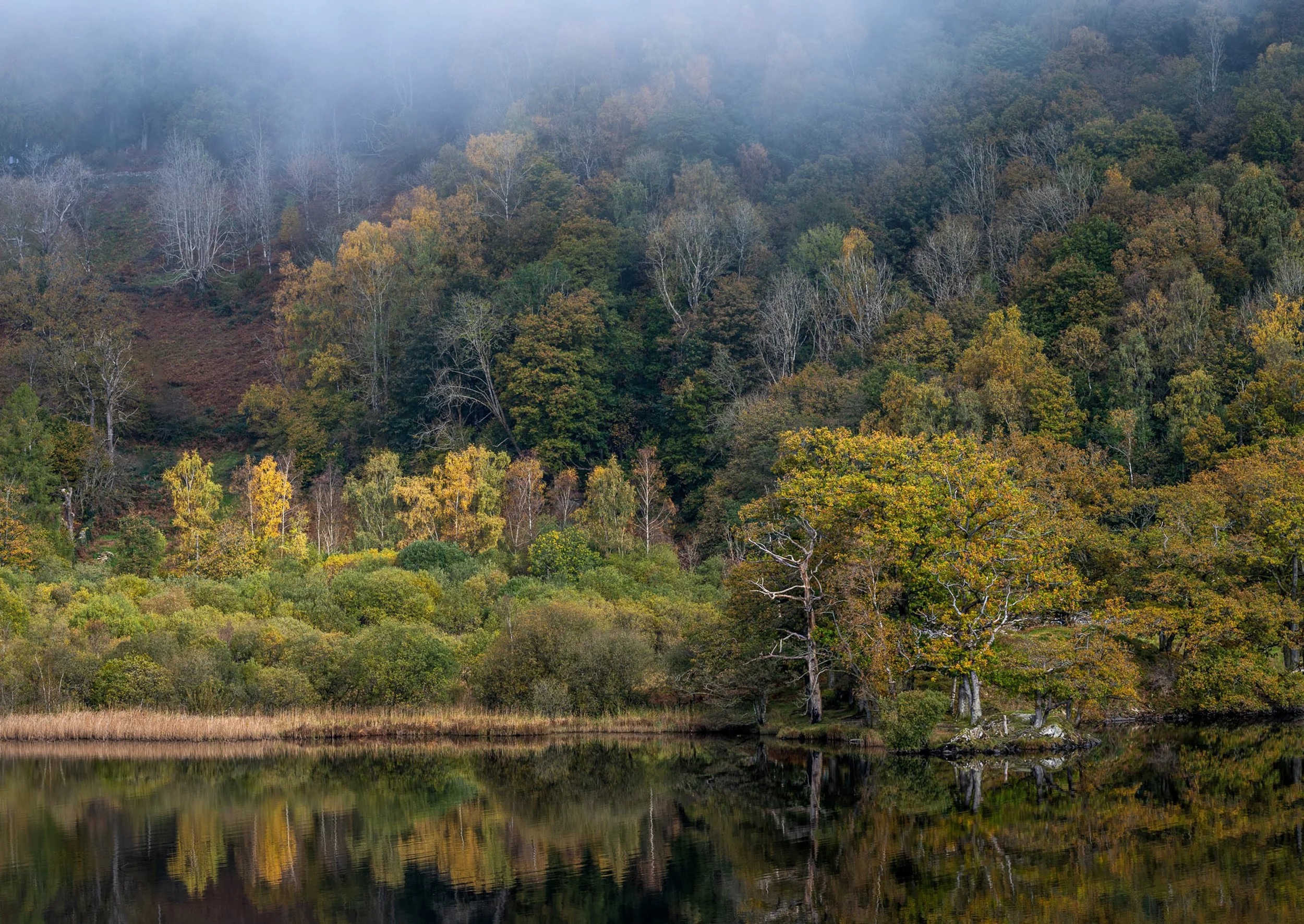
So we came back down and went to Rydal Water instead. I found a photograph there among the trees and made an image I still have now.
And somewhere during that morning I realised something.
Despite not getting the conditions I'd gone for, despite the failed plan and the ridiculous climb, I was happy.
There was nowhere else I'd rather have been than there taking pictures.
No noise. No stress.
Just me and the camera.
My head, which normally feels like a constant TikTok stream of thoughts and noise, was silent.
That was the moment I started to understand what photography was giving me.
A Photograph Isn't Finished Until It's Printed
Photography quickly became one of the biggest things in my life.
I'd spend hours watching videos, looking at photographs and dreaming about being in those places. Then I'd make an image myself, look at it and have those little moments of: "Fuck me. I took that."
But looking at it on a screen never felt like the end.
In my head, the image wasn't finished until it was printed and, ideally, framed on the wall.
I've come to understand why that matters so much to me.
When I walk past one of my photographs on the wall, I'm not just looking at a landscape. It takes me back to the day I made it. I remember being there. I remember what it felt like to become completely absorbed in finding and making the image.
I remember the quiet.
In a strange way, the print lets me put a little piece of that quiet on the wall.
Finding Focus
The idea that my experience might help somebody else actually came before Finding Focus had a name.
A few months after Mum died, while I was still working with Chris, I felt a need to tell people where I was mentally. I wrote a Facebook post about depression, grief and something men in particular aren't always very good at doing: talking.
I'd spent years answering "I'm fine" when what I really meant was, "I'm not okay, but I don't want to bother you with my problems."
At the end of that post I wrote that if being open about my own struggles helped just one person stop feeling trapped inside their own head, then being open had been worth it.
That idea never really left me.
Later, when I started thinking about creating a photography page and a blog, I knew I didn't want to call it something like Lee Watkins Photography. I wanted the name to mean something. I wanted it to describe what I had actually found through the camera.
I knew there might be a play on words somewhere in there.
Then Finding Focus came to mind.
And it just felt right.
The camera needs focus. But, somewhere along the way, so did I.
I bought findingfocus.uk because the blog was part of the idea from the beginning. I wanted somewhere I could tell the story honestly. Somewhere I could say that if you're in a dark place, getting help and talking to somebody can be massive.
I wish I'd found Chris twenty years earlier. I can't change that, but maybe telling my story could stop somebody else spending twenty years believing they simply have to endure whatever is happening inside their head.
And if somebody ever wanted to reach out because something I'd written felt familiar, I'd be happy to listen and talk about my own experience.
I also hoped somebody might look at one of my photographs and have the same reaction I had to Thomas Heaton's work. Maybe they'll pick up a camera. Maybe they'll discover the same excitement I did.
Maybe photography won't be their thing at all.
But perhaps they'll go looking for whatever their thing is.
I'm Not Fixed
Therapy hasn't turned me into a different person, and photography hasn't cured my mental health.
I'm still working with Chris and I'm still learning about myself.
Understanding ADHD, autism and anxiety has helped me realise something that would have been useful to know when I was much younger: I'm not broken. My brain just works differently.
I joke that I've even got some special powers other people don't.
I've learned how to recognise and manage the down spells better. I've learned what masking is and how much energy it can take. I've learned that sometimes the answer isn't to force myself to keep going. If my body and brain are telling me they need to crash for a day or two, sometimes I need to listen.
And I have something now that I didn't have before.
I have a place I can lose myself when the noise gets too much.
It isn't only standing on a hillside with a camera. It can be planning the next location. Sitting at the monitor editing photographs. Working on a print. All of it can take my brain somewhere quieter.
Photography is my happy place.
Mission Complete
When I first really caught the photography bug, I had a strange certainty about one thing.
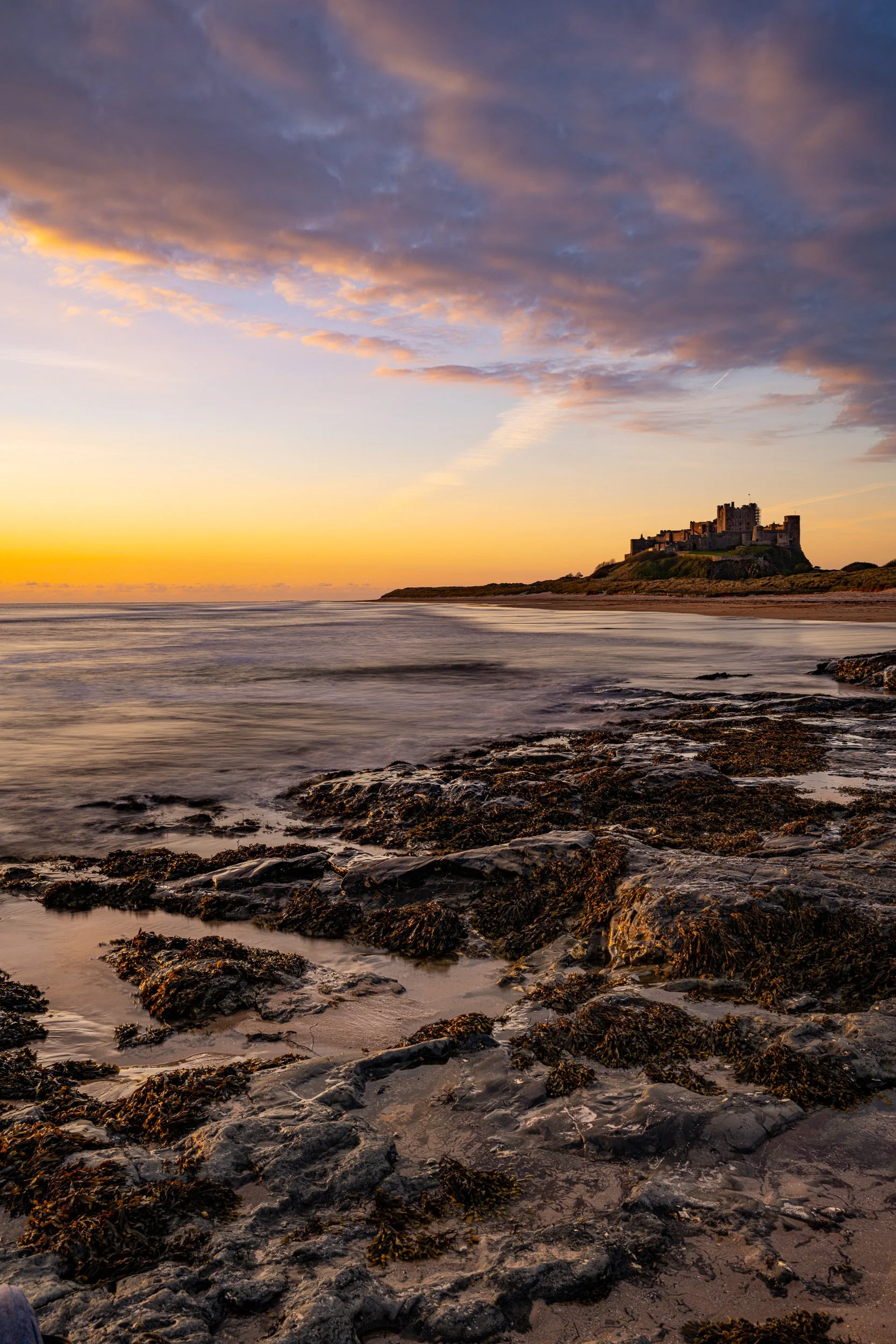
One day I was going to make an image that meant enough to me that I would print it and give it to Chris.
I didn't know what the photograph would be. I didn't know where I'd take it or how long it would take. I just knew that eventually there would be one.
It would be my way of saying thank you to the man who had helped me when I was at my lowest.
A few weeks ago, I finally made that print and gave it to him.
A couple of days later, Chris sent me a photograph.
He'd had my print framed.
It was hanging on his wall, pride of place.
For me, that was mission complete.
If you're struggling, please talk to someone
If any part of my story feels familiar, please know that you don't have to deal with everything on your own.
I'm sharing my experience, not offering professional advice. But I know how much difference having someone to talk to can make.
If you need support, these organisations are here to listen:
Samaritans: Call 116 123 — free, 24 hours a day.
Shout: Text SHOUT to 85258 — free, confidential text support, 24 hours a day.
CALM Available daily, 5pm-midnight (Campaign Against Living Miserably): Call 0800 58 58 58 — suicide prevention support.
NHS 111: Call 111 and select the mental health option if you need urgent mental health support in England.
If you or someone else is in immediate danger, call 999 or go to your nearest A&E.
You don't have to have all the answers. Sometimes the first step is simply talking.
Finding Focus isn't the story of somebody who discovered photography and suddenly everything was fine.
I'll still have difficult days. I'm still learning. I'll probably always be learning.
But I also know now that the way things feel at their darkest isn't necessarily the way they will always feel.
So if you've found this because you're struggling, there is really only one thing I want you to take away from my story:
Get help and talk, because there is a way up from here. You don’t have to have everything figured out to start feeling better.
If telling the truth about where I've been helps even one person believe that, then Finding Focus has already done what I wanted it to do.